Torsion Springs
Mounted on a shaft over the door, torsion springs turn through winding cones and transfer force through cable drums. Replacement requires matching the spring to the door's weight, height, track configuration, and drum setup.
Serving Apalachicola, Florida
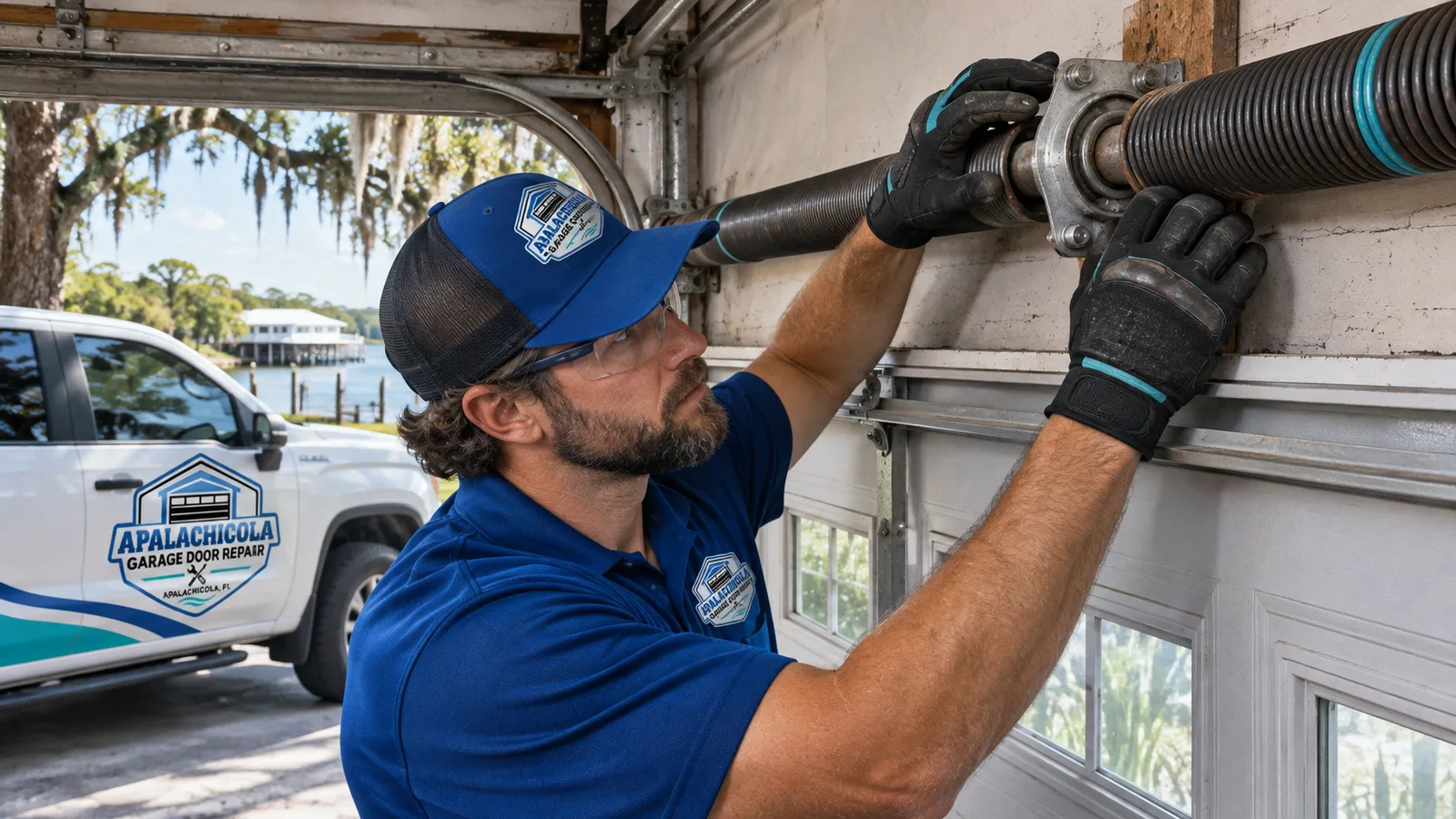
Get a broken torsion or extension spring replaced, then have the door checked and balanced for safer, smoother operation.
A broken spring can leave a garage door too heavy to lift, crooked in the opening, or stuck with a vehicle inside. When spring issues come up in Apalachicola, garage door specialists serving Apalachicola, FL handle the inspection, identify the spring system, check the related hardware, and confirm the correct replacement specifications before work begins.
Springs offset the weight of the door. They are under high tension even when the door is closed, so replacement is not a safe do-it-yourself repair. Avoid loosening winding cones, bottom brackets, cable drums, or spring anchors. If the door is open when a spring fails, keep people clear and do not stand beneath it. Disconnecting the opener does not make a door with a broken spring light enough to handle safely.
Apalachicola's coastal air and humidity can be hard on exposed metal components. Surface corrosion does not prove that a spring is about to fail, but it makes a careful inspection of coils, cables, bearing plates, fasteners, and attachment points worthwhile. The goal is to replace the failed part with a properly matched spring and verify that the complete counterbalance system works as intended.
A visible gap in a torsion spring is one of the clearest failure signs. Torsion springs sit on a shaft over the door, and a broken coil often separates into two sections. Extension springs run beside the horizontal tracks. When one breaks, the door may rise unevenly because one side has lost its counterbalance force.
Other warning signs include a loud bang from the garage, lifting only a few inches before the opener stops, loose cables, or a door that feels unusually heavy when operated manually. An opener may still make noise or pull on the top section, but it cannot replace the lifting force of the spring. Repeated attempts can strain the opener and door hardware.
Stop operating the door if a cable has come off a drum, the door is visibly crooked, or a spring is hanging loose. Do not try to force it shut. Apalachicola Garage Door Repair can assess whether the door should remain in place until the spring system is repaired.
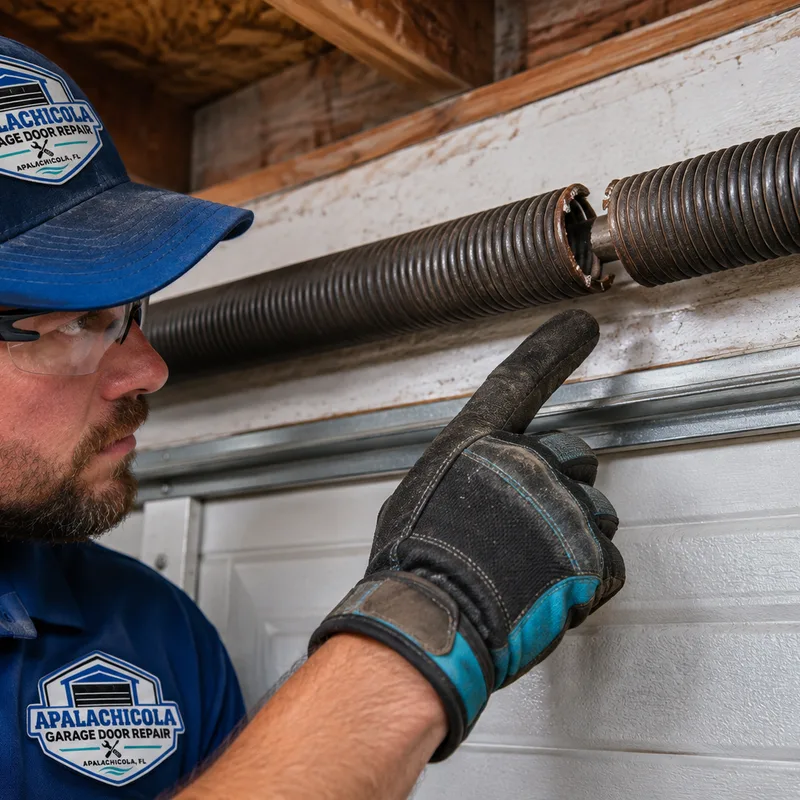
Mounted on a shaft over the door, torsion springs turn through winding cones and transfer force through cable drums. Replacement requires matching the spring to the door's weight, height, track configuration, and drum setup.
These springs stretch along the horizontal tracks as the door closes. The repair includes checking pulleys, lift cables, attachment points, and safety containment cables where the system uses them.
When a door uses a matched pair, both springs share the work. If one has failed, the other spring's condition, dimensions, and compatibility should be evaluated before deciding the repair scope.
Changing spring types is not automatically the right answer. Available headroom, shaft support, door construction, track layout, and required hardware all affect whether a conversion is practical.
Apalachicola Garage Door Repair begins with the door in a controlled position. The inspection identifies the spring type and checks cables, drums or pulleys, tracks, hinges, rollers, brackets, and opener attachment points for related damage.
The technician considers door weight and height along with the existing spring dimensions and hardware. For torsion systems, wire size, inside diameter, spring length, wind direction, and the number of springs matter.
The failed spring is removed with the door secured. The replacement is installed on the correct hardware, cables are seated properly, and the spring is tensioned for the specific door.
The repaired door is moved through its travel and checked at several positions. A properly balanced door should not slam shut or race upward. Final testing also confirms that cables track correctly and the opener can move the door without compensating for poor spring balance.
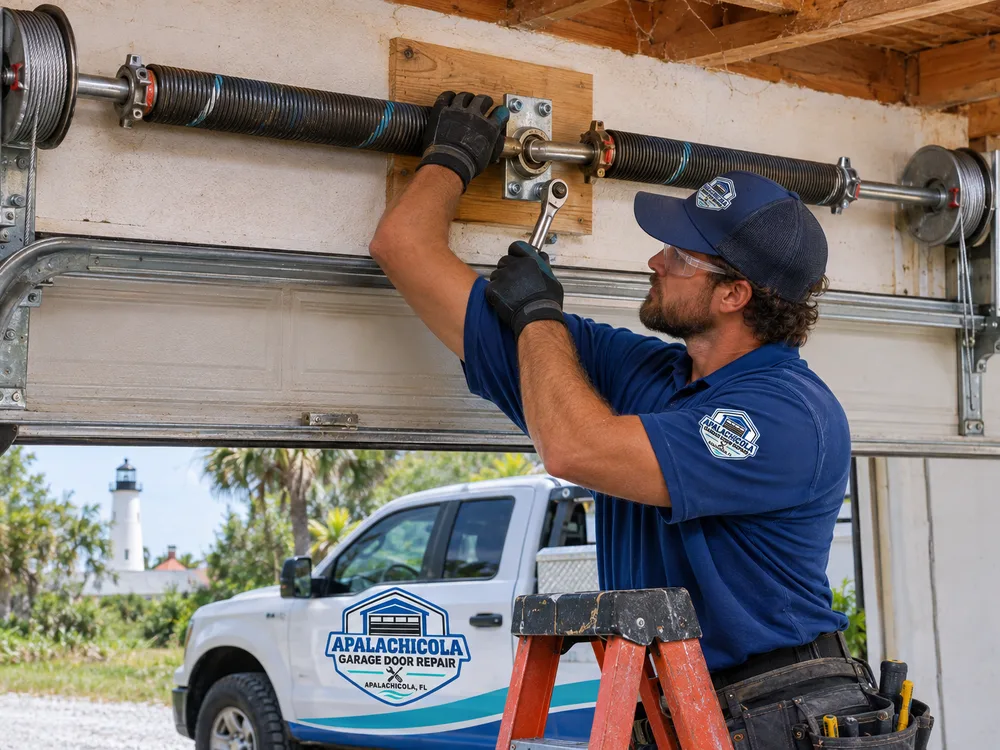
A replacement spring should be selected for the door, not simply because it looks similar to the broken one. Wire diameter, coil diameter, length, wind direction, and lift requirements affect torsion spring performance. Extension springs also need the correct weight rating and compatible hardware. Paint color alone is not enough to confirm a match because markings can fade, corrode, or vary by manufacturer.
An incorrect spring can leave the door difficult to close, too heavy to lift, or prone to drifting when stopped partway. It can also make an automatic opener work against an unbalanced load. After installation, the balance test provides a practical check: with the opener disconnected and the door controlled manually, it should move smoothly and remain reasonably stable at intermediate positions.
Coastal exposure also makes the condition of adjacent steel parts relevant. Rusted lift cables, worn bearings, damaged drums, or loose mounting hardware can interfere with an otherwise correct spring repair. Those items should be identified during inspection rather than hidden by extra spring tension.
If the door is stuck, crooked, or too heavy to lift, leave the spring and cable hardware alone and arrange an inspection before operating it again.
CALL NOW: (850) 721-1841Do not operate a garage door with a broken spring unless a trained technician has assessed it and determined a controlled way to move it. The door may weigh hundreds of pounds, and loose cables or an uneven load can make it drop or bind. If a vehicle is trapped in an Apalachicola garage, explain that when arranging the inspection so the door's position and access needs can be considered.
Both springs may be recommended when the door uses a matched pair of the same age and service history, but the assessment depends on the system's condition and specifications. A paired torsion setup is designed to share the load. Apalachicola Garage Door Repair can inspect the remaining spring and explain whether replacing one or both is appropriate.
A straightforward residential spring replacement is often completed during one service visit, but the time depends on identifying the correct spring, securing the door, and addressing related hardware problems. A crooked door, displaced cable, corroded fastener, damaged drum, or uncommon spring setup can extend the work.
Garage door springs commonly fail after repeated cycles of opening and closing, though corrosion, improper adjustment, mismatched parts, or damaged hardware may contribute. Apalachicola's humid coastal environment can promote corrosion on exposed steel, so the inspection should cover more than the visible break.
Spring replacement may correct uneven travel when the failure caused one side to lose lifting force, but cables, drums, pulleys, tracks, and rollers must also be checked. A cable that has jumped a torsion drum or a worn extension-spring pulley can keep the door crooked after a new spring is installed.
A garage door opener is not designed to replace the counterbalance force of the springs. Trying to make it lift a dead-weight door can damage the opener attachment, bend the top door section, or leave the door stuck partway. Stop using the opener when a broken spring is suspected.
The correct spring is identified from the door's weight and height, spring system, track and drum configuration, and measured spring specifications. For a torsion spring, those measurements typically include wire size, inside diameter, overall coil length, and wind direction. The repaired door is then balance-tested rather than judged by appearance alone.
Tell Apalachicola Garage Door Repair what the door is doing, whether it is open or closed, and whether a vehicle is trapped. The repair approach is an inspection, a clear repair scope, and spring matching based on the actual door.