No response from the opener
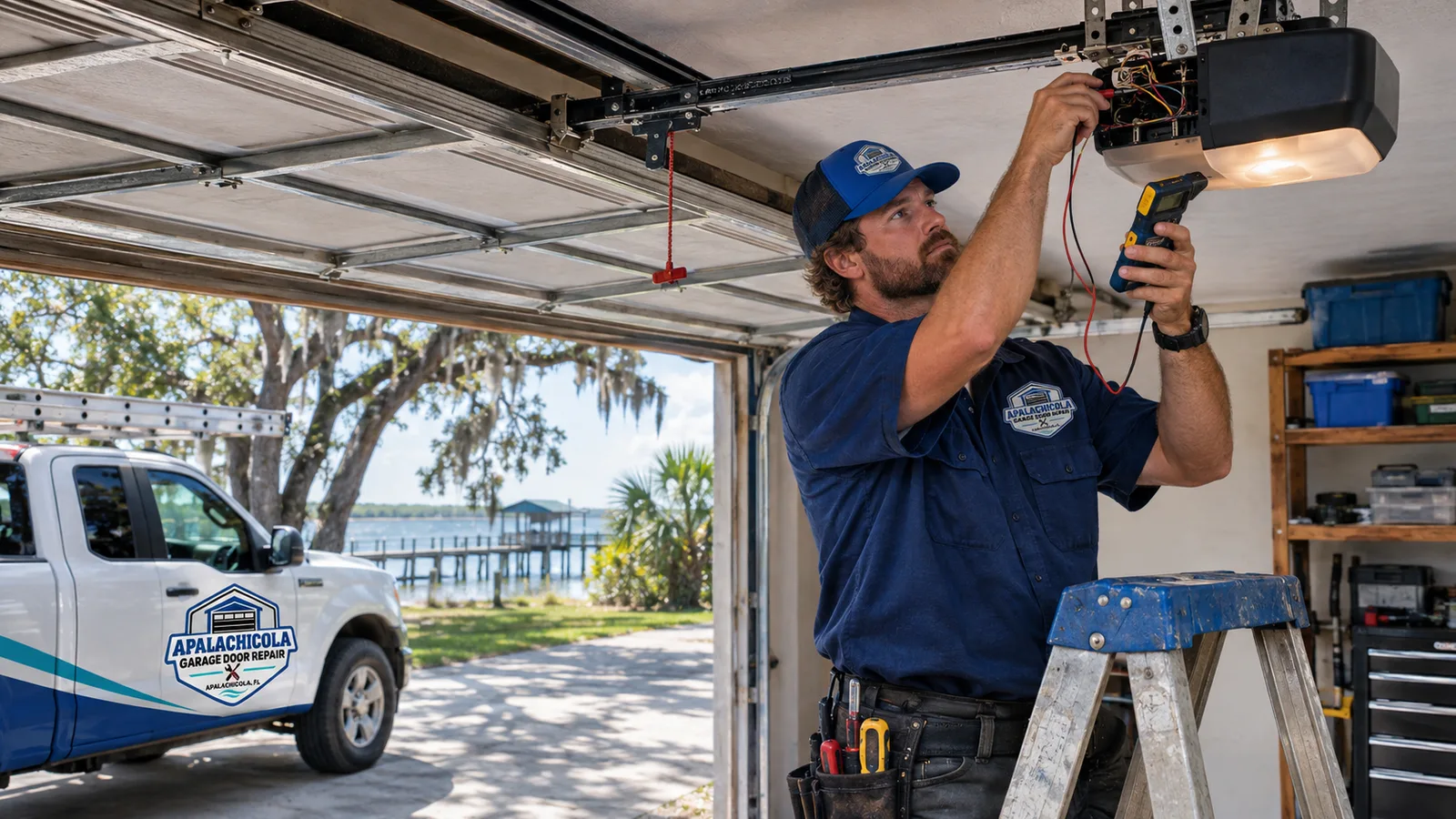
A completely unresponsive unit may have a power supply issue, tripped outlet, damaged wall control, failed logic board or internal motor fault. Testing narrows the cause before parts are considered.
Serving Apalachicola, Florida
Get a clear diagnosis for an opener that will not run, reverses unexpectedly, makes unusual noise or stops before the door completes its travel.
When the opener hums without moving the door, loses remote control or refuses to close, the failed part is not always obvious. Garage door opener repair in Apalachicola, FL starts by separating an opener fault from a door problem. A door that binds, has a broken spring or is out of balance can overload a working motor. A disconnected trolley, stripped drive gear, failed capacitor or damaged logic board can produce similar symptoms for different reasons.
Apalachicola Garage Door Repair checks the complete operating sequence before recommending work, and Apalachicola's garage door specialists examine how the motor starts, how the trolley travels and whether the opener stops at the correct limits. The inspection also covers wall controls, remotes, photo-eye sensors, wiring and the manual release. That approach identifies the source of the fault instead of treating one symptom at a time.
Coastal North Florida brings humid air, wind-driven rain and salt exposure, all of which can contribute to corrosion at terminals, brackets and other exposed metal components. These conditions make careful inspection especially useful when a problem is intermittent. Loose connections and corroded hardware can behave differently from a failed motor or control board.
A completely unresponsive unit may have a power supply issue, tripped outlet, damaged wall control, failed logic board or internal motor fault. Testing narrows the cause before parts are considered.
A disconnected trolley, stripped drive gear, broken belt or chain problem can let the motor run without transferring movement to the door.
Misaligned photo eyes, dirty sensor lenses, damaged low-voltage wiring or excessive door resistance can trigger a reversal. The safety system should be tested rather than bypassed.
A remote may need a battery, reprogramming or replacement. When every transmitter stops working, the receiver, antenna, lock setting or logic board may require attention.
Noise can come from worn internal gears, a loose chain, a damaged rail or strain caused by a door that does not move freely by hand.
Travel limits and force settings control where the opener stops and how it responds to resistance. Incorrect adjustment or a component fault can leave the door partly open or cause unwanted reversal.
An automatic opener is designed to guide a properly balanced garage door. It is not meant to lift a door that has become unusually heavy. With the opener disengaged, the door should move manually without binding and should not drop uncontrollably. If it does, the door hardware needs attention before the opener is placed back in service.
The drive style also affects diagnosis. Chain-drive openers use a metal chain and may need tension correction when there is excessive slack. Belt-drive units rely on a reinforced belt and are generally quieter, while screw-drive systems move the trolley along a threaded mechanism. Direct-drive and wall-mounted jackshaft units have different layouts but still depend on sound door hardware and correctly operating safety controls.
Apalachicola Garage Door Repair evaluates the installed equipment and the condition around it. Repair may involve replacing a worn gear assembly, capacitor, trolley, belt, chain component, sensor, wall control or logic board when a compatible part is available. If the motor unit has widespread damage, is obsolete or needs several major parts, replacement may be the more sensible option.
Tell Apalachicola Garage Door Repair what the opener does, what sound it makes and whether the issue affects the wall control, remotes or both. Mention any recent power interruption or impact near the sensors.
The door is checked for balance, binding and visible hardware trouble. The opener inspection covers power, controls, the drive assembly, trolley, rail, wiring, travel settings and safety sensors.
Operational tests are used to isolate the fault. This avoids adjusting force or replacing electronics when the real issue is door resistance, a disconnected carriage or damaged wiring.
The repair approach depends on part condition, compatibility and the overall state of the opener. The recommended scope should be understood before repair begins.
After service, the opener is cycled through full travel. The wall control, remotes, limits, manual release, auto-reverse function and photo-eye response are checked.
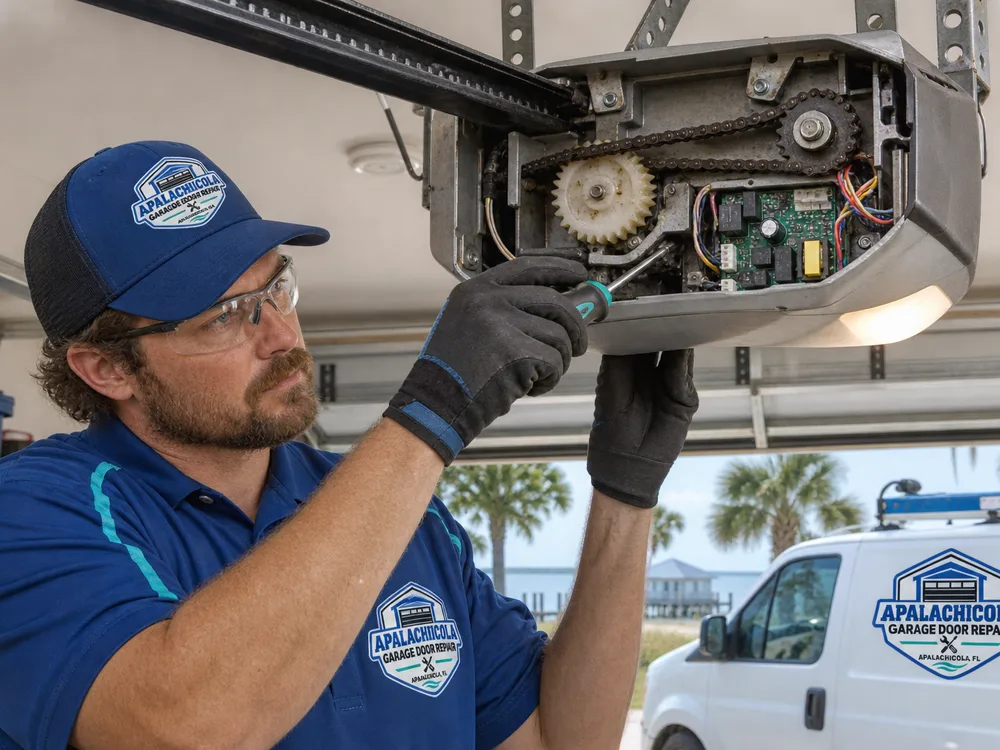
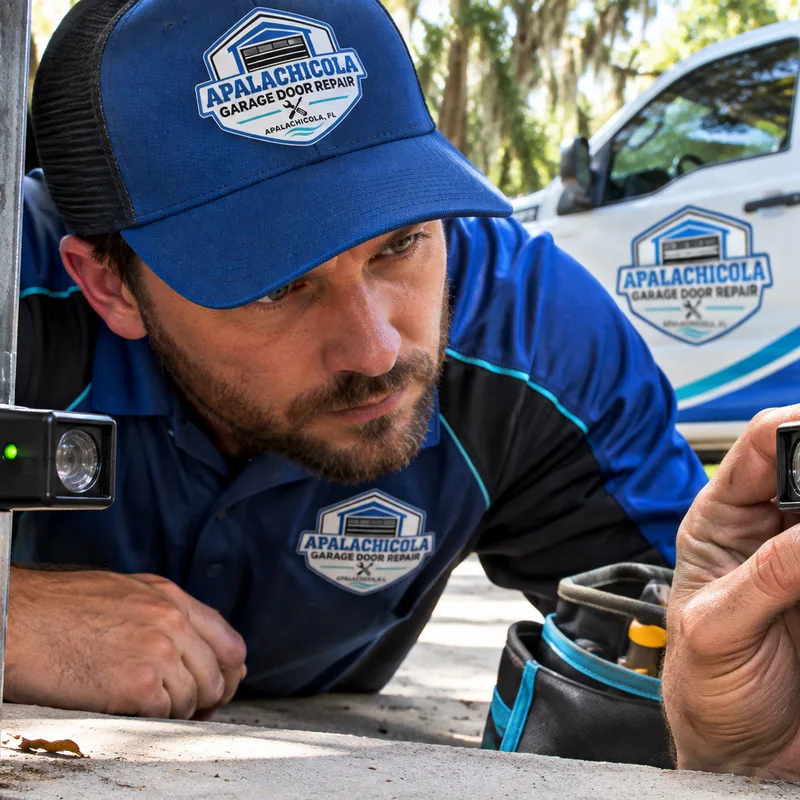
Photo-eye sensors are installed near the bottom of the tracks and project an infrared beam across the opening. If the beam is blocked, the lenses are dirty, the brackets move out of alignment or the wiring is damaged, the opener may refuse to close the door. Many units signal this condition through blinking indicator lights or opener lights, but the pattern varies by manufacturer.
Sensors should not be taped together, bypassed or mounted where they cannot detect an obstruction. Their purpose is to stop or reverse closing movement when the beam is interrupted. The opener's contact-reversal response also needs to work correctly. Excessive closing force is not a proper fix for a door that binds or reverses.
Storm-related power interruptions can also leave an opener needing reprogramming, a reset or surge-related diagnosis. If the door must be closed manually, use the emergency release only when the opening is clear and the door can be controlled safely. A heavy or falling door points to a door hardware problem, not a setting that should be increased.
An opener that behaves unpredictably can damage drive parts or leave the garage unsecured. Arrange an inspection to identify the fault and determine whether repair or replacement makes better sense.
CALL NOW: (850) 721-1841Many opener faults can be repaired when the motor unit is in reasonable condition and compatible parts remain available. Sensors, remotes, capacitors, gears, trolleys and some logic boards are replaceable. Replacement may be more practical for an obsolete unit, extensive electronic damage or several major failures. Apalachicola Garage Door Repair can compare the condition of the opener with the likely repair scope after testing it.
A door that reverses while closing commonly has an obstructed or misaligned photo eye, damaged sensor wiring, incorrect travel settings or mechanical resistance. Bright light and movement at a loose sensor bracket can also contribute to intermittent symptoms. Keep the sensor path clear, but do not bypass the safety system or increase closing force to overcome a binding door.
If the wall control works but a remote does not, the likely causes include a depleted battery, lost programming, transmitter damage or a problem with the opener's receiver or antenna. If every remote failed at once, check whether the wall console's lock mode was activated. The remote frequency and programming method must match the installed opener.
Diagnosis is available for common residential drive types, including chain, belt and screw systems. The repair depends on the model, failed part and whether a compatible component is obtainable. Wall-mounted and direct-drive units require model-specific testing because their motor and travel arrangements differ from standard overhead rail systems.
Many straightforward repairs can be completed during one service visit when the required part is available. Diagnostic time and completion time vary for intermittent electrical faults, uncommon models and problems involving both the opener and door hardware. Providing the brand, model number and symptoms before the visit can help identify likely parts.
The door can often be operated manually after the trolley is released, but only if the door is balanced and can be controlled safely. Do not pull the emergency release while a heavy door is open or moving. If the door drops, binds or feels unusually heavy, stop using it and arrange service because the problem may involve the spring or other door hardware.
First confirm that the opener has power and that its outlet or circuit protection has not tripped. Some units may need the trolley reconnected if the emergency release was used, while remotes or travel settings may need model-specific reprogramming. Burning odor, visible damage or repeated electrical tripping calls for professional diagnosis rather than repeated resets.
Tell Apalachicola Garage Door Repair what the opener is doing, which controls still work and whether the door can move by hand. A focused inspection can identify the cause and set out the appropriate repair plan.