Door stuck open
An open door may be caused by a broken spring, failed cable, jammed roller, bent track, or opener problem. Disconnecting the opener does not make a spring-damaged door safe to lower by hand.
Serving Apalachicola, Florida
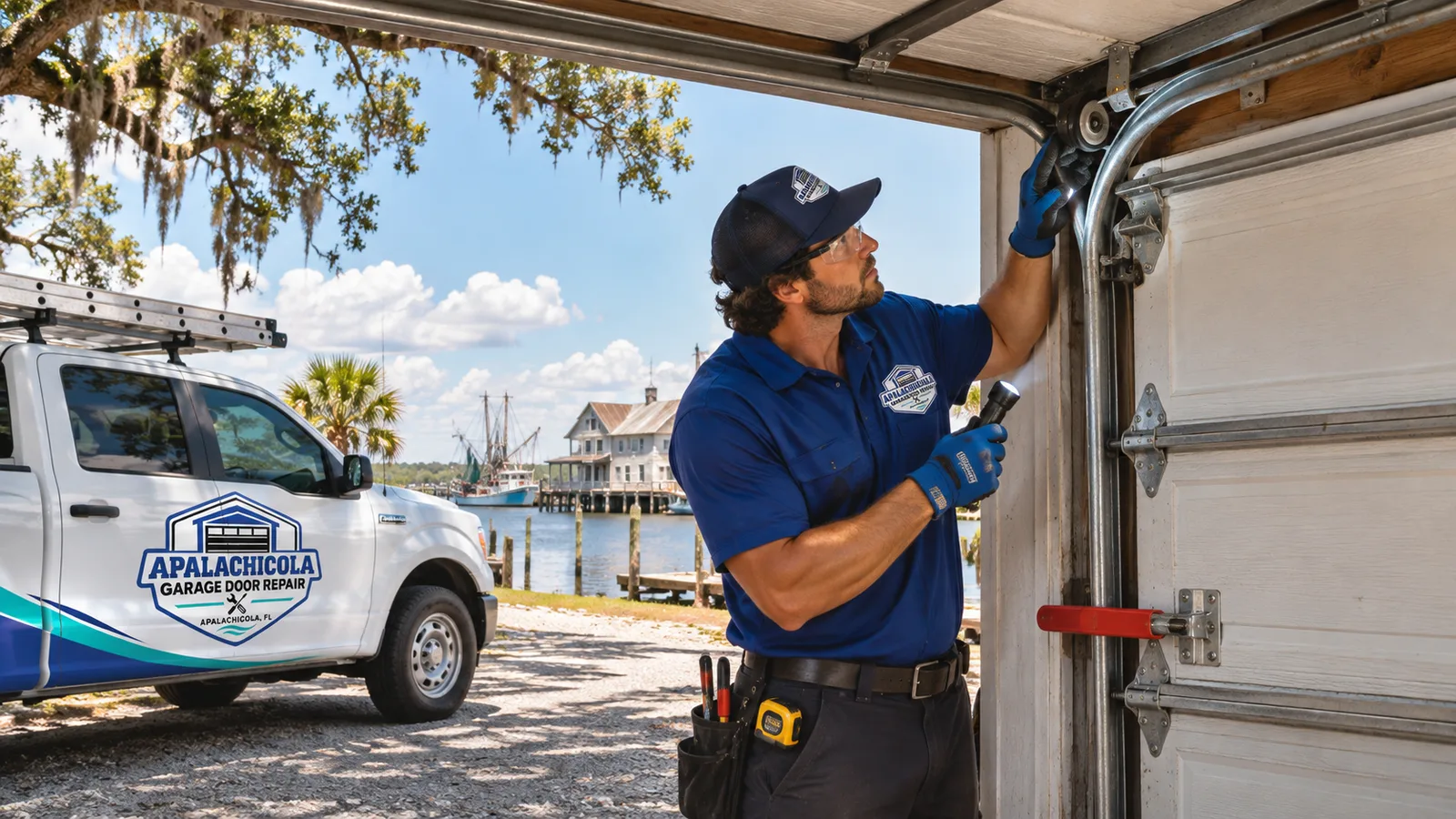
Get help with a door that is stuck open, hanging unevenly, off track, or refusing to close. The first priority is making the opening safe, then identifying the failed part and the right repair.
When a heavy garage door is stuck open or will not close, waiting can leave vehicles, tools, and the interior of the building exposed. Emergency garage door repair in Apalachicola, FL starts with a practical assessment of the door, tracks, springs, cables, rollers, hinges, opener, and safety controls.
Apalachicola Garage Door Repair handles urgent garage door problems in Apalachicola. The team at a professional garage door company in Apalachicola, FL focuses on finding the mechanical or electrical fault, explaining the repair, and restoring safe operation when the condition allows it.
Do not force the door with the opener or repeatedly press the remote. If the door is crooked, a cable is loose, or a spring has separated, extra movement can pull rollers from the tracks or let the door drop. Keep people and pets away, leave the door where it is, and arrange an inspection.
An open door may be caused by a broken spring, failed cable, jammed roller, bent track, or opener problem. Disconnecting the opener does not make a spring-damaged door safe to lower by hand.
Photo-eye obstruction, misalignment, damaged wiring, track resistance, or an incorrect force setting can stop the closing cycle. If the door reverses after touching the floor, the travel limits may also need attention.
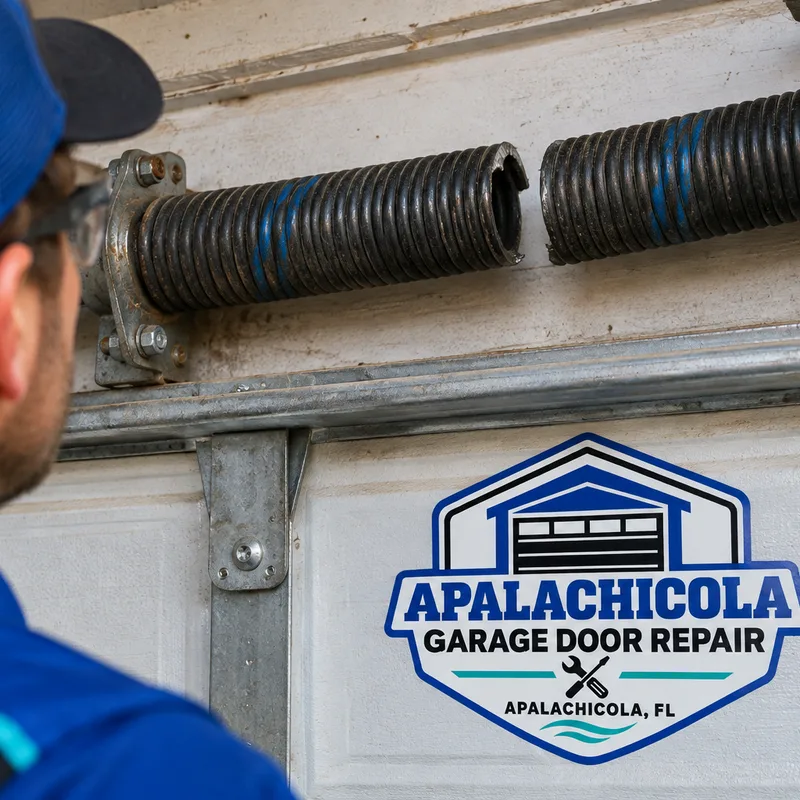
A separated torsion spring often leaves a visible gap in the coil. Extension springs run along the horizontal tracks and fail differently. Both systems store significant energy and require the correct replacement method.
Lift cables keep the door level as it travels. A damaged cable can leave one side low, wrap incorrectly around the drum, or allow the door to bind in the tracks.
A roller outside the track or a visibly bent track calls for immediate caution. Operating the opener can twist the door or damage additional rollers, hinges, and track brackets.
The cause may be a disconnected trolley, worn drive component, broken spring, stripped gear, or loss of power. The door must be checked before assuming the opener itself needs replacement.
Stay clear of the opening if the door is suspended, tilted, or making sharp popping sounds. Do not stand beneath it. Avoid touching loose cables, cable drums, spring cones, or bottom brackets because these parts may remain under tension even when the door is not moving.
If the door is fully closed and stable, leave it closed. If it is open, do not attempt to pull it down unless a qualified professional has confirmed that manual movement is safe. The emergency release cord separates the opener trolley from the door, but it does not support the door's weight. With a failed counterbalance system, releasing the trolley can make the door unexpectedly heavy.
Apalachicola's coastal setting also makes an open garage more vulnerable to wind-driven rain and humid, salty air. Move belongings away from the opening only if you can do so without passing beneath an unstable door. Keep remotes and wall controls out of use until the system has been inspected.
Tell Apalachicola Garage Door Repair whether the door is open, closed, crooked, off track, or hanging by one side. Mention any loud bang, loose cable, damaged panel, burning smell, or vehicle impact.
People, pets, and vehicles are kept away from the travel path. The technician checks whether the door can remain in place during diagnosis or needs to be stabilized first.
The assessment covers the spring system, lift cables, drums, bearings, rollers, tracks, hinges, opener connection, photo eyes, travel settings, and visible mounting hardware.
The failed component and any related damage are explained before work begins. Correct spring size, cable routing, track alignment, and opener compatibility matter to safe operation.
After the approved work, the door is balanced and cycled. Closing force, travel limits, photo-eye response, hardware, and movement through the tracks are checked as applicable.
A garage door may weigh hundreds of pounds, but its spring system offsets much of that load during normal movement. When a spring breaks, the opener may hum, stop, or lift only a few inches because it was not designed to raise the door's full weight by itself.
Spring selection depends on the door's measured weight, height, track configuration, drum type, and the spring's wire size, inside diameter, and length. Replacing a spring simply because it looks similar can leave the door poorly balanced. On a two-spring torsion system, the condition and cycle history of both springs should be considered before deciding what to replace.
The same whole-system approach applies to cables and tracks. A cable that has jumped its drum may be the result of a lower obstruction, a binding roller, track movement, or uneven spring tension. Straightening the visible symptom without correcting the cause can lead to another failure.
Strong coastal weather can push debris against a garage door, disrupt electrical service, or expose existing corrosion in fasteners, tracks, cables, and bottom hardware. After severe weather, inspect from a safe distance before using the opener. A buckled panel, shifted track, broken glass, or door that no longer sits square in the opening needs professional assessment.
Vehicle impact is another urgent condition. Even when the door still moves, bent sections can pull hinges out of alignment and force rollers against the track. Stop operating it if the panel folds, the track separates from its brackets, or the door binds. A technician can determine whether the system can be stabilized and repaired or whether damaged components prevent safe operation.
Salt-laden coastal air can accelerate corrosion on exposed steel. Routine lubrication cannot repair frayed cables, cracked hinges, loose brackets, or weakened spring components. Those parts need direct inspection and, when damaged, proper replacement.
A garage door that is hanging unevenly or stuck open can become more dangerous with each attempted cycle. Describe what happened and the door's current position so the immediate risk and repair needs can be assessed.
CALL NOW: (850) 721-1841Do not try to close it manually unless a qualified professional has confirmed that it is safe. A broken spring removes much of the counterbalance, so the door can be extremely heavy and may fall after the opener trolley is released. In Apalachicola, keeping the opening covered before coastal rain may feel urgent, but personal safety comes first.
A crooked door with a loose cable usually has an uneven lifting condition that requires the door to be stabilized before repair. The cable may have snapped, come off its drum, or lost tension because of a spring or track problem. Stop using the opener and keep clear of the door.
The opener should not be used to lift a door with a broken spring. Openers move a properly balanced door; they are not intended to carry its full dead weight. Continued attempts can damage the trolley, rail, drive gear, or door sections.
The most useful details are the door's current position, whether it is level, what happened immediately before the failure, and whether a spring or cable appears broken. Apalachicola Garage Door Repair also needs to know about impact damage, unusual sounds, smoke, electrical odor, or a door hanging over a vehicle.
It needs prompt attention if the door cannot secure the opening or if it reverses because of binding, impact damage, or unstable hardware. First remove any obvious object from the doorway without entering beneath the door. Do not bypass the photo eyes or increase force settings to make a resistant door close.
An off-track door should be handled by a garage door professional. The door may be carrying uneven spring and cable tension, and moving one roller can shift the full assembly. Apalachicola Garage Door Repair can assess the rollers, tracks, cables, hinges, and panels before attempting to reposition it.
A power outage alone does not mean the opener has failed. Check whether power has returned and whether the opener's outlet or breaker is working, but do not release or move the door if a spring is broken, a cable is loose, or the door is crooked. Electrical restoration will not correct a mechanical failure.
Timing depends on the door's position, the damage, access, and the parts required. Some faults can be corrected during the initial service visit, while impact-damaged panels or less common components may require a different plan. The first goal is to assess the hazard and determine the safest way to secure the opening.
Tell Apalachicola Garage Door Repair whether the door is open, closed, crooked, off track, or making unusual sounds. That information helps identify the immediate safety concern and prepare for the repair.