
Opening and Framing Check
The installer confirms the finished opening, jamb condition, header support, floor slope, and clearances. Weak or uneven mounting surfaces must be addressed before tracks and spring hardware are secured.
Serving Apalachicola, Florida
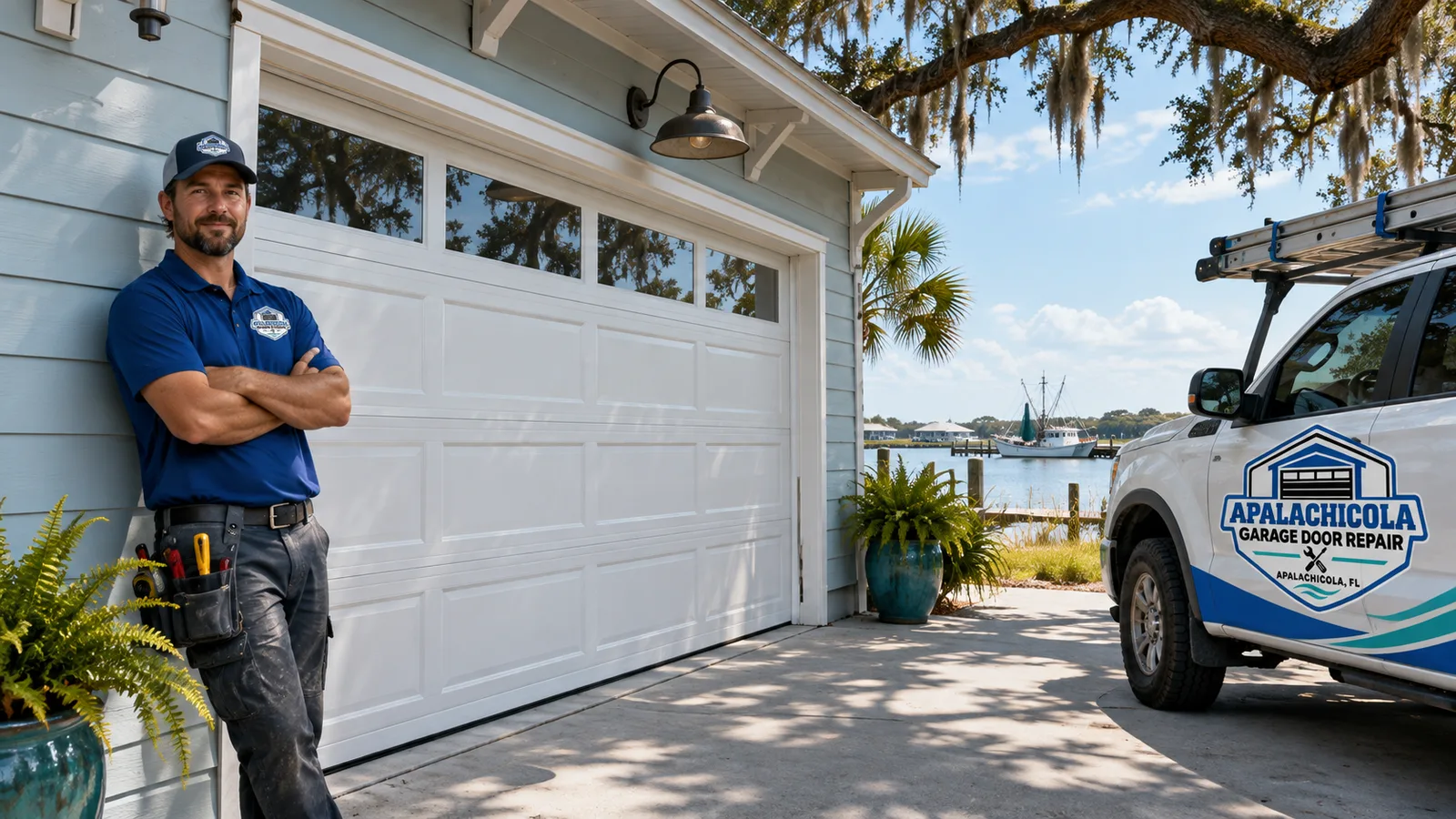
A new door measured for your opening, installed with matched tracks and hardware, balanced correctly, and tested before the job is complete.
Garage door installation in Apalachicola, FL starts with accurate measurements and a clear understanding of how the garage is used. Apalachicola Garage Door Repair checks the opening width and height, side room, headroom, backroom, floor level, and framing before installation is planned. Those dimensions determine which door, track configuration, spring system, and operator setup can work safely in the available space.
The door is only one part of the assembly. Tracks, rollers, hinges, brackets, cables, drums, springs, weather seals, and fasteners must work together. Reusing worn or mismatched parts can undermine the operation of a new door, so the installation scope should identify what stays and what is replaced. As a garage door company Apalachicola homeowners rely on, Apalachicola Garage Door Repair approaches installation as a complete fitting job rather than treating the door panels as a stand-alone product.
Coastal conditions also matter. Salt-laden air and high humidity can accelerate corrosion on exposed steel hardware and damaged finishes. Material selection, intact coatings, corrosion-resistant components where appropriate, and routine cleaning all affect how well a door holds up near the Gulf and Apalachicola Bay.
Sectional overhead doors are a common choice because hinged panels travel on curved tracks and store beneath the garage ceiling. Steel doors offer a broad range of panel designs and finishes. Insulated steel doors add a backing layer and may make sense for an attached garage, a workshop, or a space where temperature and sound matter. Other available materials can include aluminum, composite, and wood, though weight, finish maintenance, wind exposure, and hardware requirements must be considered.
Door construction is commonly described as single-layer, double-layer, or triple-layer. Insulation may be polystyrene or polyurethane, and its thermal resistance is expressed as an R-value. A higher R-value describes greater resistance to heat flow, but it does not by itself identify the best door. The garage's use, sun exposure, door size, budget, and desired interior finish all belong in the assessment.
Design choices include raised or flush panels, window placement, decorative hardware, color, and surface texture. Windows add daylight but also change privacy, weight, and appearance. In Apalachicola's coastal environment, the practical conversation should also cover the door model's wind-load requirements and whether local permitting or product-approval documentation applies to the proposed installation.
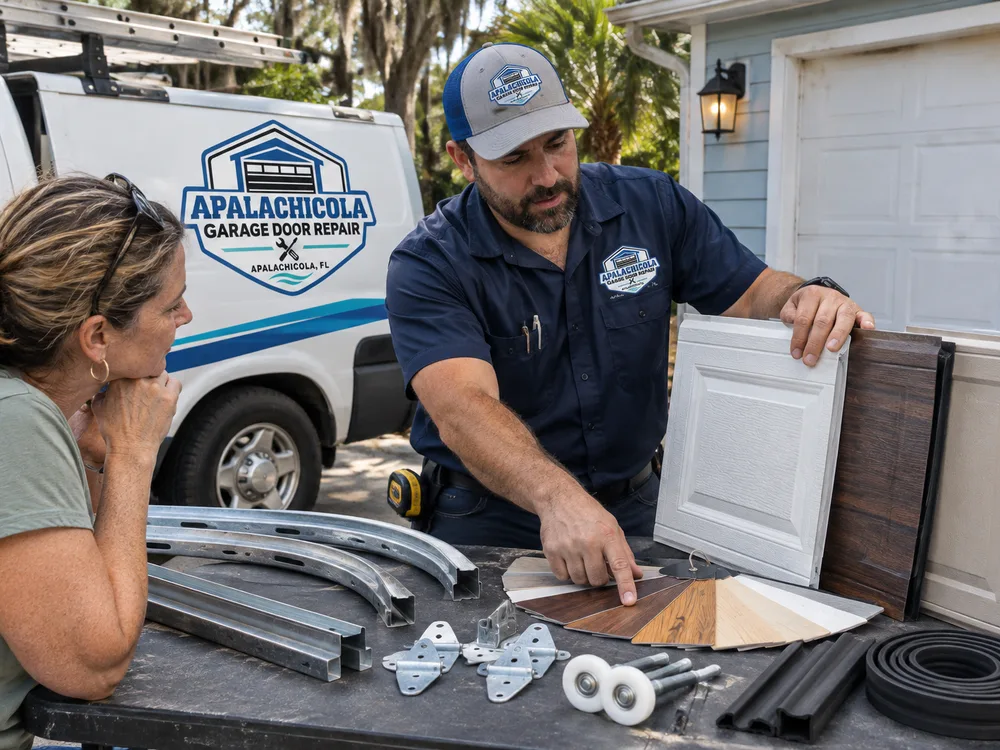
The installer confirms the finished opening, jamb condition, header support, floor slope, and clearances. Weak or uneven mounting surfaces must be addressed before tracks and spring hardware are secured.
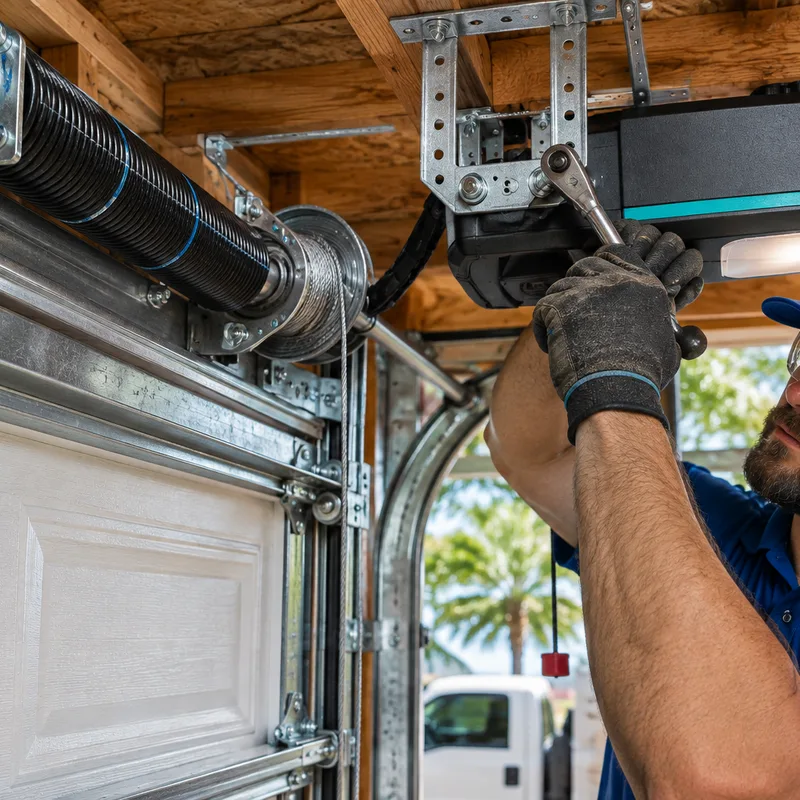
Vertical and horizontal tracks must match the door model, height, and lift arrangement. Rollers, hinges, brackets, cables, and fasteners are installed in their specified positions.
Torsion or extension springs are selected for the actual door weight and geometry. Spring work involves stored energy and belongs in trained hands with the proper tools.
A bottom seal closes against the floor, while perimeter stop molding helps limit wind-driven rain, insects, and debris around the sides and top. An uneven slab may require special attention.
If an automatic opener is part of the setup, its rail, mounting, force settings, travel limits, photoelectric sensors, and manual release must suit the installed door.
The finished door should move smoothly, remain properly balanced, close evenly, and reverse as intended when connected to an opener. Hardware receives a final visual check.
Apalachicola Garage Door Repair measures the opening and available clearances, checks the mounting surfaces, and notes floor irregularities or obstructions that affect the installation.
The scope identifies the door size, construction, insulation, panel design, windows, track type, spring system, weather seals, and opener requirements. Any permit or documentation question should be settled before work begins.
When replacing an old door, spring tension is released using the proper procedure before panels, tracks, and related hardware are removed. The opening is then prepared for the new system.
Panels are assembled in sequence, tracks are positioned and supported, and the spring and cable system is fitted. Track spacing and alignment are checked throughout the work.
When an opener is included, it is mounted and connected only after the door operates correctly by hand. Travel limits, force controls, remote devices, and photoelectric sensors are then set.
The door is cycled through full travel and checked for balance, even cable tension, smooth roller movement, seal contact, and secure hardware. The manual release and basic operating precautions are checked.
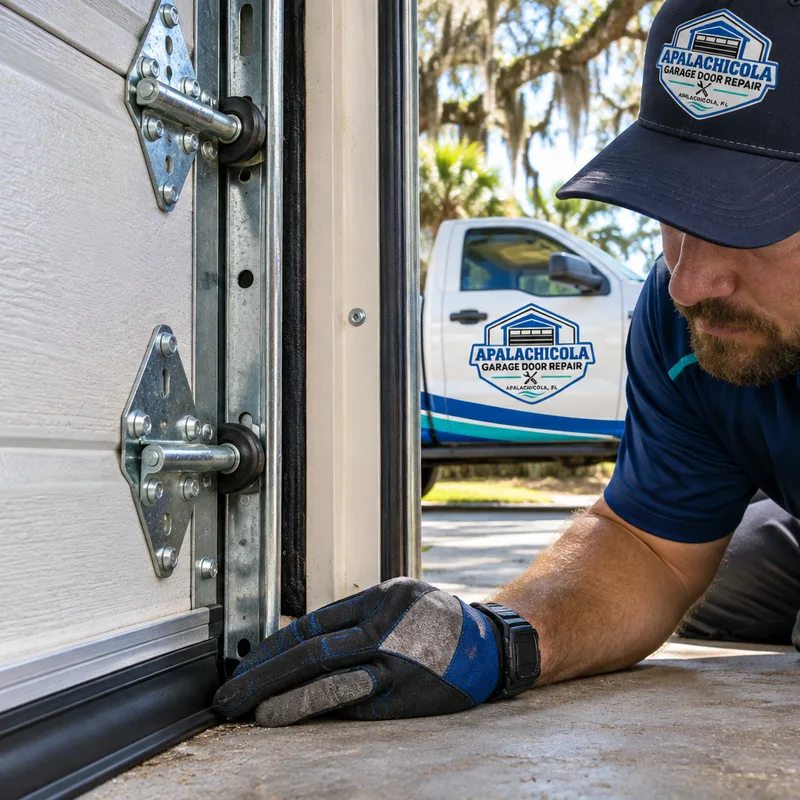
A garage door can look level while still binding, rattling, or carrying uneven cable tension. The details behind the panels determine how it moves. Vertical tracks need consistent spacing from the jambs, horizontal tracks need proper support and pitch, and the shaft, drums, cables, and springs must remain coordinated through the full travel cycle.
Balance is checked with the opener disconnected. A properly configured spring system offsets much of the door's weight so the door can be moved by hand without dropping or shooting upward. The opener guides a balanced door; it should not compensate for incorrect springs or tight tracks.
Safety devices need deliberate testing. Photoelectric sensors are mounted near the floor and aligned across the opening. The opener's travel and force settings are adjusted for the installed door, and the manual release remains accessible. For homes exposed to coastal storms, owners should also understand whether a door uses permanent reinforcement or requires removable bracing before severe weather.
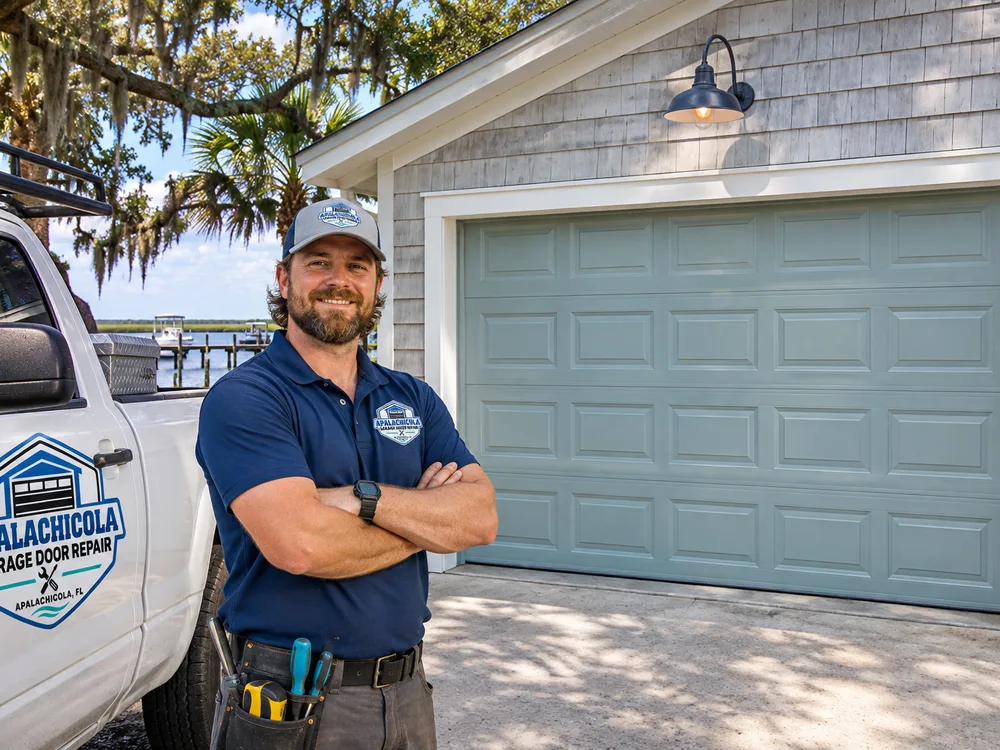
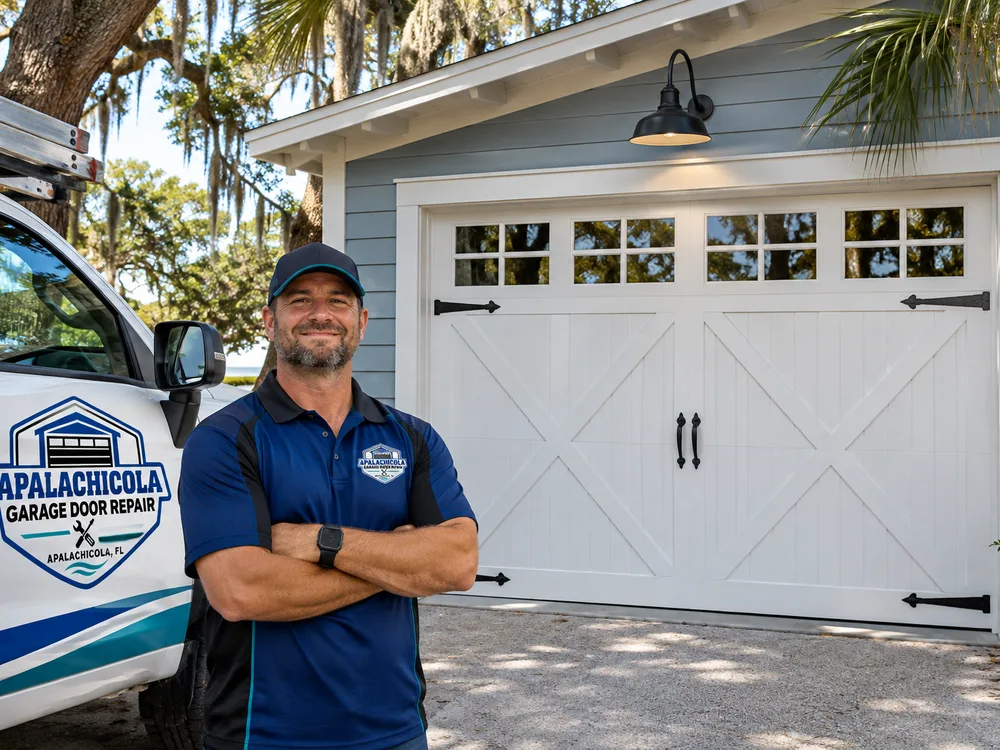
Start with measurements and a written installation scope so the selected door, hardware, and opener all fit the opening and the way you use the garage.
CALL NOW: (850) 721-1841A straightforward residential replacement can often be completed within one working day after the correct door and hardware are available. Custom doors, framing corrections, electrical work, unusual track layouts, or permit requirements can extend the arrange. Apalachicola Garage Door Repair can give a more useful timeline after measuring the opening and confirming the full scope.
The required door specification depends on the property, opening, applicable building code, and permitting requirements. Because Apalachicola is in Florida's coastal region, wind-load documentation and approved product details should be addressed before a door is ordered. The door, tracks, supports, fasteners, and reinforcement need to match the approved assembly rather than being selected separately.
New doors should generally use the track and hardware specified for that door model. Existing tracks may have the wrong profile, spacing, thickness, radius, or mounting arrangement, even when they appear to fit. The safer approach is to evaluate the assembly as a system and include matched tracks when required by the manufacturer.
An opener does not always need replacement, but it must be compatible with the new door's size, weight, travel, and reinforcement requirements. Its condition, safety sensors, mounting, rail length, and controls should be checked. A new door must operate properly by hand before any existing or new opener is connected.
Insulation is worth considering when the garage is attached, used as a workshop, or affected by strong afternoon sun. Insulated construction can also make the door panels more rigid and gives the interior a finished backing, depending on the model. The R-value, panel construction, and added weight should be compared rather than choosing by insulation thickness alone.
The key measurements are the finished opening width and height, side room, headroom, and backroom. The installer also checks the jambs, header, ceiling obstructions, floor level, and space needed for the opener. Measuring only the old door can reproduce a poor fit or miss clearance problems.
A coastal garage door benefits from regular washing to remove salt residue and from periodic checks of the finish, fasteners, rollers, hinges, cables, seals, and track supports. Damaged coatings and early corrosion should be addressed promptly. Springs and cables remain high-tension components, so adjustment or replacement should be left to a trained technician.
Yes, installation can be planned for a new opening once the dimensions, framing, clearances, door specification, and project readiness are confirmed. Coordination matters because finished floors, jamb surfaces, ceiling work, electrical power, and opener support can all affect the final setup. Measuring before the door is ordered helps prevent costly fit problems.
Tell Apalachicola Garage Door Repair about the opening, the door you are replacing, and how you use the garage. The repair approach is to confirm measurements, suitable door options, hardware requirements, and a clear installation scope.